Infinite Flight Violation Avoidance System
A descent watchdog built into SkyYoke: the violation avoidance system tracks your speed and altitude together and acts through the autopilot before the 250-knot limit catches you out.
The Infinite Flight Violation Avoidance System (VAS) is an automatic overspeed-protection layer in SkyYoke that monitors indicated airspeed and altitude and intervenes through the autopilot — clamping the speed target to 250 kt or managing descent energy — before Infinite Flight issues a violation below 10,000 feet. It arms roughly 2,000 feet above the band and hands your original targets back once you are clear.
The rule that catches good pilots: 250 below 10,000
- StandbyHigh up, the system watches your speed and altitude.
- ArmedApproaching 10,000 ft it arms automatically.
- Over the limitToo fast? It clamps the autopilot speed to 250 kt.
- ProtectedNo overspeed violation — your speed is restored later.
Infinite Flight enforces one speed restriction without mercy: 250 knots indicated, any time the aircraft is below 10,000 feet. Cross it and the simulator records an overspeed violation against your account — no warning shot, no second chance. SkyYoke's Infinite Flight Violation Avoidance System, VAS for short, was engineered for exactly this failure mode. It is an automatic protection layer that watches speed and altitude together and steps in through the autopilot before the limit is broken, not after.
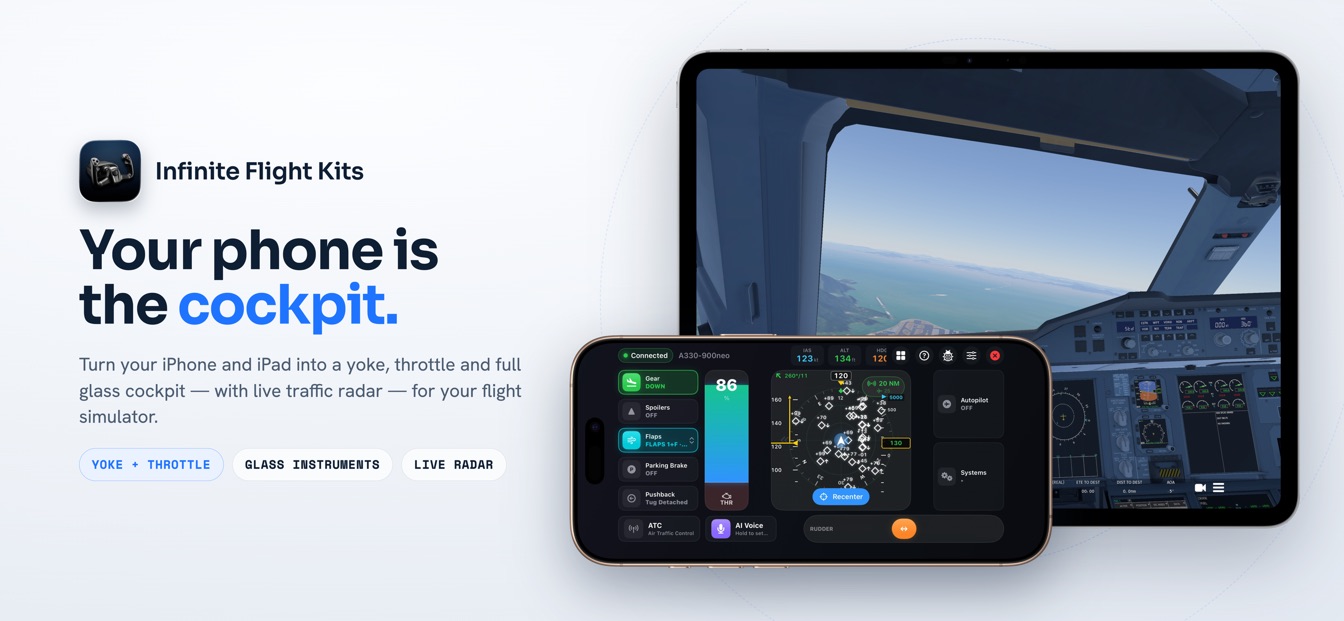
Hardly anyone busts the limit in a climb, because a climb is slow and deliberate. Descents are different. You are coming down from a cruise where 300-plus knots was perfectly legal, the nose is below the horizon so the airspeed wants to build, and the bottom of the descent is the busiest stretch of the whole flight: stepping down through altitudes, planning the approach, watching traffic, answering ATC. An airliner descending at 2,500 feet per minute eats the last 2,000 feet above the band in under a minute — precisely the minute your eyes are somewhere else.
How the Violation Avoidance System arms
- Dial altitudeSwipe the ALT cell — the scrub rate scales with your speed.
- Dial headingSet the heading bug the same way.
- Dial speedArm the speed target with a swipe.
- EngageTap the master and the autopilot flies it.
Like the protections on a real flight deck, VAS stays out of the way until it becomes relevant. Up at cruise it sits in STANDBY: enabled, listening, touching nothing. When the aircraft descends to roughly 2,000 feet above the restricted band — about 12,000 feet — it transitions to ARMED and begins continuously weighing your airspeed, your autopilot speed target and your descent rate against the 250-knot limit. Climb back out of the danger zone and it releases again, returning anything it borrowed along the way.
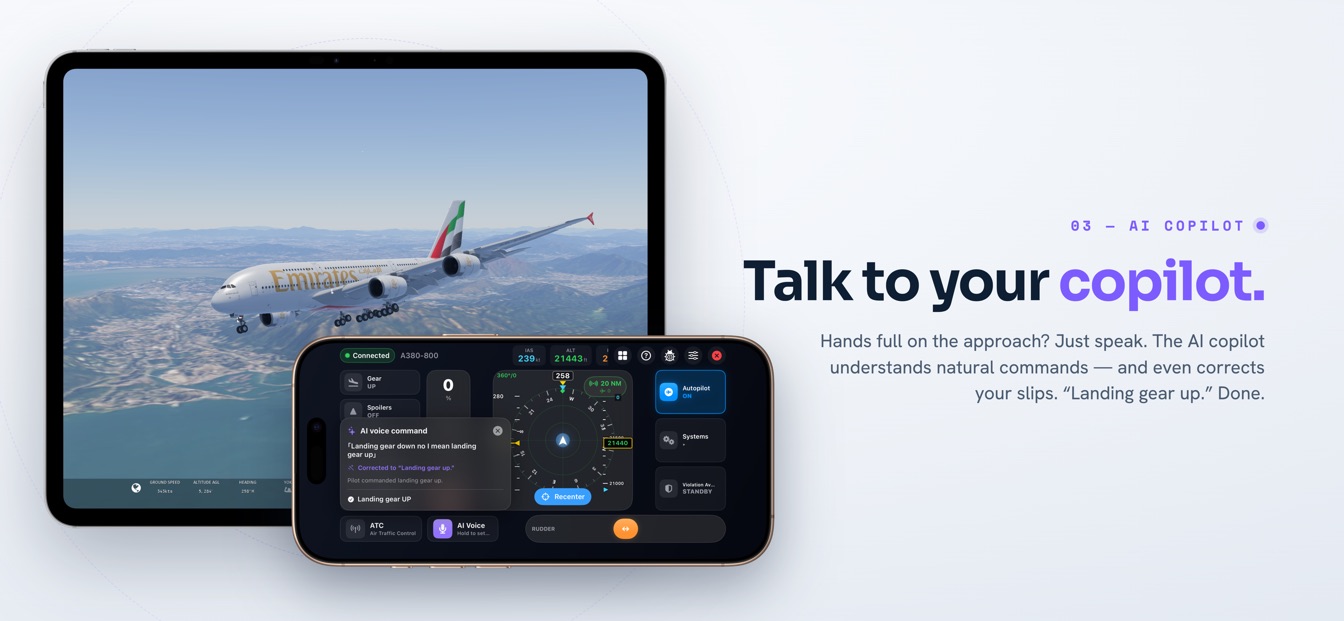
That 2,000-foot margin is the heart of the design. Corrections made through an autopilot take a few seconds to bite — a retargeted speed bug does not slow the jet instantly — so the system needs room to start acting while there is still air between you and the limit line. Arming at 12,000 feet turns the intervention into a gentle adjustment; waiting until 10,100 would turn it into a scramble.
Two intervention strategies
- Same Wi-FiPut your iPhone and the simulator device on one network.
- Auto-discoverSkyYoke finds the sim on the LAN — connect in a tap.
- Bind axes onceMap roll, pitch, throttle and yaw, guided step by step.
- FlyTilt, slide and speak to fly the aircraft in real time.
Once armed, VAS chooses between two interventions, depending on what is actually about to cause the violation.
Clamping the speed target
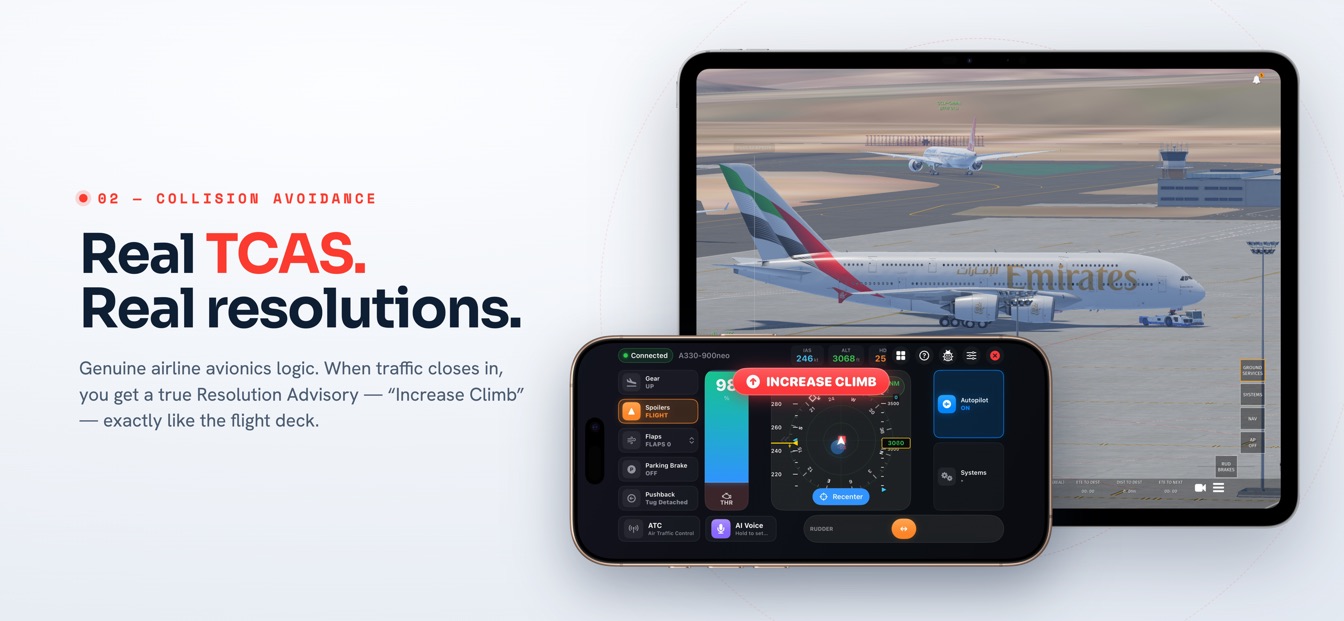
The common case is simple forgetfulness: the autopilot speed bug is still parked at a cruise-descent number — 290, 310 — as the aircraft sinks toward the band. Here VAS clamps the target to 250 knots, announces "Speed limit, two fifty" aloud, and quietly remembers the value you had actually dialed. When you later climb clear of the band, your original target comes back automatically. Think of the clamp as a loan, not a confiscation: the system never throws your intentions away, it only postpones them.
Managing the descent energy
The harder case is physics. A jet pointed downhill is converting altitude into airspeed, and if the descent is steep enough, simply setting the bug to 250 changes nothing — gravity outvotes the autopilot. For that situation VAS manages the aircraft's energy directly, in the same order a line pilot would:
- Thrust to idle. The first move is to stop adding energy, pulling the power back so the engines are no longer fighting the deceleration.
- Level off to bleed speed. If idle thrust is not enough, VAS levels the aircraft — announcing "Speed, leveling off" — so the wing sheds knots quickly instead of trading altitude for more of them.
- Find the steepest legal descent. Once the speed is safely back under the limit, the system hunts for the steepest descent rate that still holds 250, so you keep coming down rather than hanging level while the approach slips away.
From the cabin, the effect is a descent that suddenly got well-managed — no alarm, no lurch. And because it commands the same autopilot and the same power lever you fly from the remote throttle, you can take back over at any moment.
Phases, colors and callouts
VAS reports its state through a four-phase annunciator: OFF, STANDBY, ARMED and PROTECTING. The cockpit tile and its banner recolor with each phase, so a glance tells you whether the system is asleep, quietly watching or actively flying the recovery.
| Phase | Meaning | What VAS is doing |
|---|---|---|
| OFF | The toggle in Settings is disabled | Nothing — the system is fully asleep, with no monitoring and no intervention. |
| STANDBY | Enabled, aircraft well above the protected band | Tracking altitude and speed quietly; takes no action and changes nothing. |
| ARMED | Within about 2,000 ft above the 10,000 ft band | Comparing airspeed, speed target and descent rate against the 250 kt limit, ready to step in. |
| PROTECTING | An intervention is in progress | Clamping the speed target, idling the throttle or leveling off — then restoring your settings once clear. |
The spoken annunciations matter more than they might seem. "Speed limit, two fifty" and "Speed, leveling off" are deliberately short and unambiguous, in the same spirit as SkyYoke's spoken TCAS advisories and takeoff callouts: your eyes stay on the descent while your ears get the system's status. You always know when VAS has acted, and you always know why.
Switching it on
Getting protected takes less than a minute:
- Enable the toggle. Open Settings in SkyYoke and switch on the Violation Avoidance System — it is a single toggle, on or off.
- Fly a supported airliner on autopilot. Pick an Airbus or Boeing type in Infinite Flight and engage the AP; VAS acts through the autopilot, so the autopilot has to be the one flying.
- Descend as you normally would. Passing roughly 12,000 feet, the annunciator steps from STANDBY to ARMED.
- Let an intervention finish. If the tile shows PROTECTING, wait for it to release before re-dialing your own numbers — it hands your original speed target back on its own.
One layer in a wider safety net
Overspeed protection follows the same philosophy as the rest of SkyYoke's remote cockpit: the phone in your hand has spare attention, so it should watch what you cannot. The windshear warning listens for sudden headwind loss near the ground, takeoff callouts speak V1 and rotate so your eyes stay on the centerline, and VAS guards the one rule that is easiest to break exactly when the workload spikes.
If you would rather build the habits that keep you out of trouble in the first place — descent planning, when to wind the bug down, how to stay ahead of the jet — start with the companion pilot's guide to avoiding violations, then let VAS be the backstop for the day the plan goes sideways. SkyYoke is available now on the App Store — download it on the App Store / Google Play to be aboard from day one.
Frequently asked questions
How SkyYoke's overspeed protection behaves, what it changes and where its limits are.
What is the Infinite Flight Violation Avoidance System?+
It is an automatic overspeed-protection feature in SkyYoke, an unofficial iPhone controller app for Infinite Flight. The system continuously compares your indicated airspeed and altitude against the 250-knot limit below 10,000 feet, arms itself about 2,000 feet above that band, and intervenes through the autopilot — capping the speed target or managing descent energy — before the simulator records a violation.
When does VAS arm, and when does it stand down?+
At cruise the system sits in STANDBY — enabled and watching, but taking no action. Once you descend to roughly 2,000 feet above the 10,000-foot band, around 12,000 feet, it switches to ARMED and starts checking your airspeed, speed target and descent rate against the limit. When you climb back clear of the band it releases to STANDBY and restores any settings it changed.
What does VAS actually change when it intervenes?+
It depends on the threat. If your autopilot speed target is set above 250 knots near the band, VAS clamps the target to 250 while remembering the value you dialed, then restores it once you are clear. If the aircraft is descending too fast to slow down, it manages energy instead: idling the throttle, leveling off to bleed speed, then finding the steepest descent rate that still holds the limit.
Does it work while I am hand-flying?+
No. The system intervenes through Infinite Flight's autopilot, so the autopilot must be engaged for the protection to act, and it supports Airbus and Boeing airliners. When you hand-fly, the 250-knot limit is yours to manage — treat VAS as a backstop for managed, autopilot-flown descents rather than a replacement for basic speed awareness.
Does the Violation Avoidance System guarantee I will never get a violation?+
No, and that honesty is deliberate. VAS dramatically reduces the risk on autopilot-flown descents, but it is an aid, never a guarantee: extreme energy states, very late arming, hand-flying or unsupported aircraft can still carry you past the limit. Final responsibility for staying under 250 knots below 10,000 feet always rests with the pilot, exactly as it would on a real flight deck.
Now on the App Store.
SkyYoke is available now — download it on the App Store and turn your iPhone into a full flight-sim cockpit.
Download on the App Store Get it on Google Play