A Replacement for Your Thrustmaster Yoke
When the electronics fade, the desk goes away, or your simming moves to a tablet, the smartest Thrustmaster yoke replacement may be the iPhone you already carry. Tilt to bank and pitch — and bring the rest of the cockpit along on the same screen.
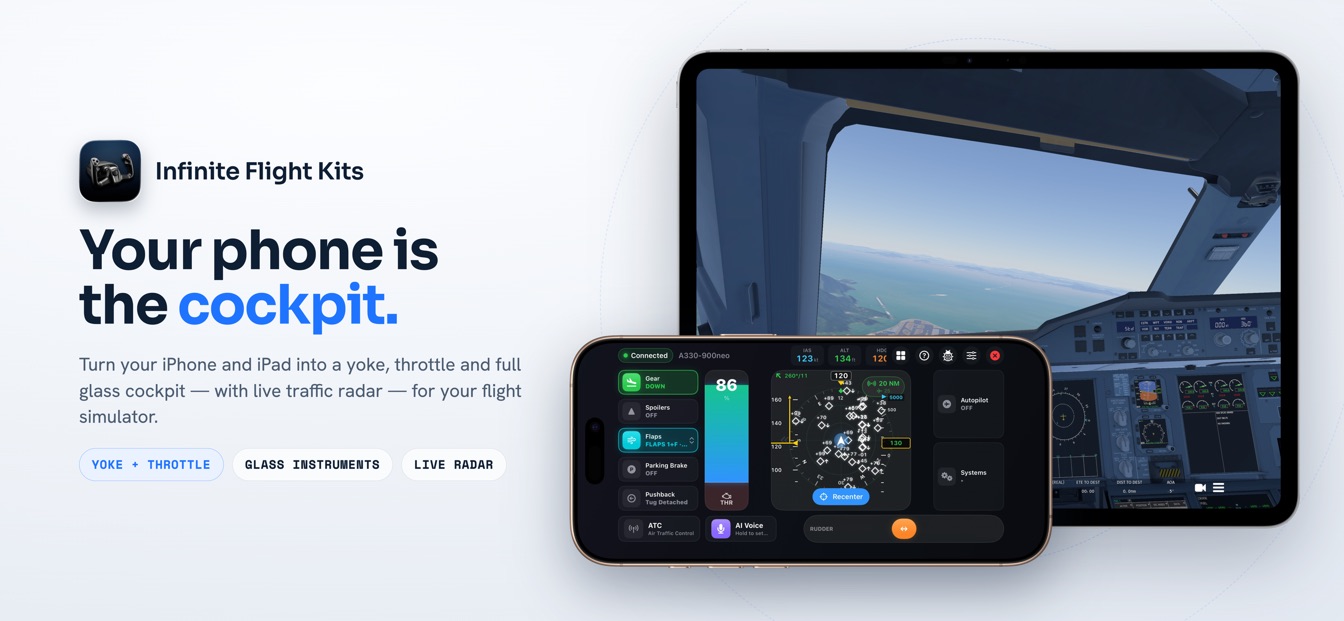
A practical replacement for a Thrustmaster yoke is the iPhone in your pocket: SkyYoke turns it into a wireless motion yoke for a flight simulator running on another device — roll your wrists to bank, pull toward you to pitch — with a smart throttle, rudder bar and autopilot panel on the same screen, over your own Wi-Fi, with no desk clamp and no USB port.
Why simmers go looking for a Thrustmaster yoke replacement
- Push up — thrustThe top of the lever is forward climb power.
- Pull to idleA haptic click marks the idle detent.
- On ground, fast — reverseIn the red zone the lever holds reverse thrust.
- Slowing — wheel brakesBelow 40 kt the same zone becomes proportional braking.
- Airborne — blockedReverse in the air is locked out with a warning.
Desk yokes rarely retire gracefully. One week the ailerons develop a stutter around center; the next, the elevator axis reads full-up at rest, and a recalibration only postpones the verdict. Potentiometers wear, USB boards give up, and repairing an older unit can cost a surprising fraction of what it cost new. When that day comes, the most practical replacement for a Thrustmaster yoke may already be in your pocket — because the iPhone you carry has motion sensors, a touchscreen and a Wi-Fi radio that together do everything a control column does, plus a fair amount it never could.
Failed electronics are only one road to this page. Plenty of simmers part with a perfectly healthy yoke:
- The clamp problem. A yoke wants a sturdy desk edge and a permanent footprint, and not every home — or housemate — will grant it one.
- A move. Boxing up a column, quadrant and pedals is a natural moment to ask whether you will really set them all up again on the other side.
- Upgrade math. Stepping up from an entry-level column to a heavier one is a real expense before you have added a single lever or pedal.
- Tablet simming. If your simulator is Infinite Flight on an iPad, a USB yoke simply has no port to plug into — and no adapter changes that.
Turning your wrists into the control column
- Hold & centreOne tap captures your grip as wings-level neutral.
- Tilt leftRoll the phone left and the aircraft banks left.
- Tilt rightRoll the other way to bank right — 1:1, smoothly.
- Tilt backEase the top toward you to pitch up and climb.
SkyYoke's Motion Yoke treats the phone itself as the column. Roll your wrists to the left and the ailerons follow; ease the top of the phone toward your chest and the nose comes up — the same two inputs a 737 crew makes through the control wheel, minus the shaft between your knees. If the heavy Boeings in Infinite Flight are your home fleet, the gesture feels familiar from the first turn.
Because the app measures the gravity vector against a neutral point you choose — not the phone's raw orientation — the grip is yours to pick. Hold the phone upright like a wheel, or leave it flat on your lap; both fly identically, and there is no gimbal lock to wander into. A configurable tilt range from 15 to 60 degrees decides how far you lean for full deflection, and a single tap recenters the neutral whenever you shift in your seat.
Feel is adjustable down to the axis. Pitch, roll, yaw and brake each carry their own sensitivity, dead zone, expo curve, inversion, trim and smoothing, and the whole chain streams to the simulator at 60 Hz with automatic reconnection if your network hiccups. Prefer not to wave the phone around at all? A self-centering Touch Joystick pad is one settings switch away.
What never came in the Thrustmaster box
A hardware yoke ends at its base plate; everything beyond roll and pitch is another purchase. Replace it with a phone and the rest of the flight deck arrives on the same piece of glass:
- Smart throttle. One lever runs from idle to full thrust, holds reverse for you on the landing roll at 40 knots and above, and becomes a proportional wheel brake below that — with a haptic tick at the idle detent. On Airbus types it turns into a gated quadrant with IDLE, CLIMB, FLX·MCT and TOGA detents.
- Rudder bar. A self-centering strip along the bottom edge handles taxi steering, slips and crosswind de-crab.
- Autopilot panel. AP master plus ALT, V-S, SPD and HDG strips you scrub with a swipe, VNAV, LNAV and approach toggles, and one-tap altitude presets.
- Systems panel. Battery, APU and external power, lights, cabin signs, autobrake and engine start — showing only the controls your current aircraft actually has.
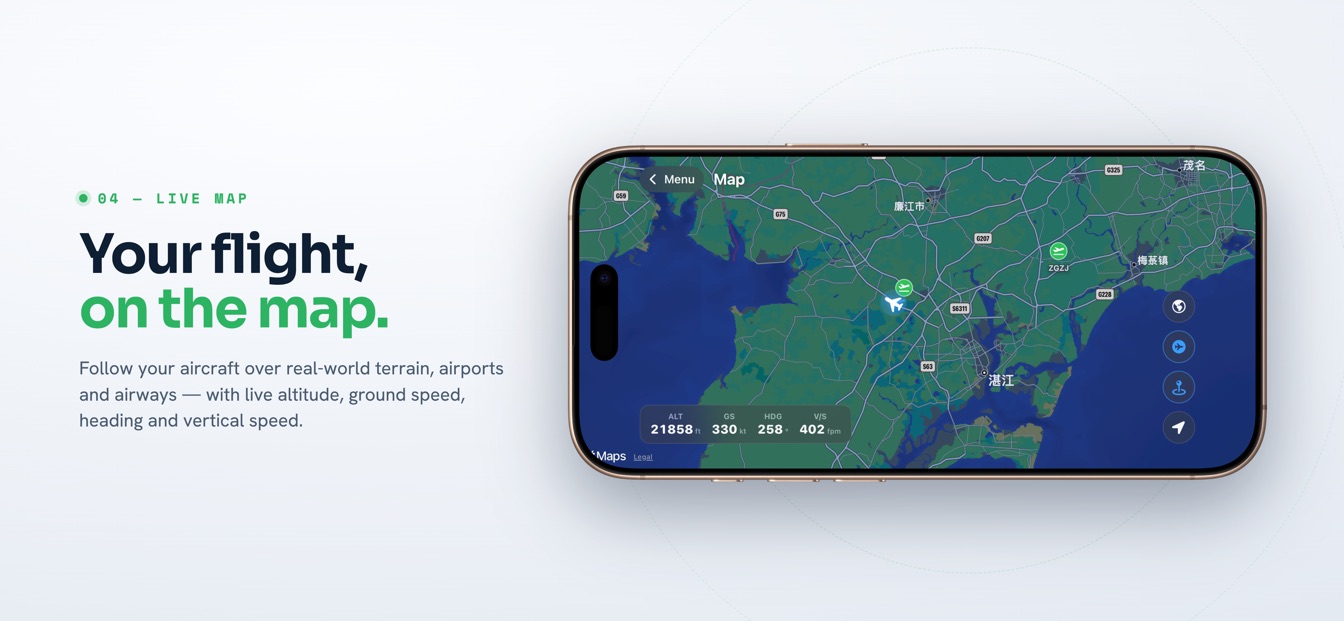
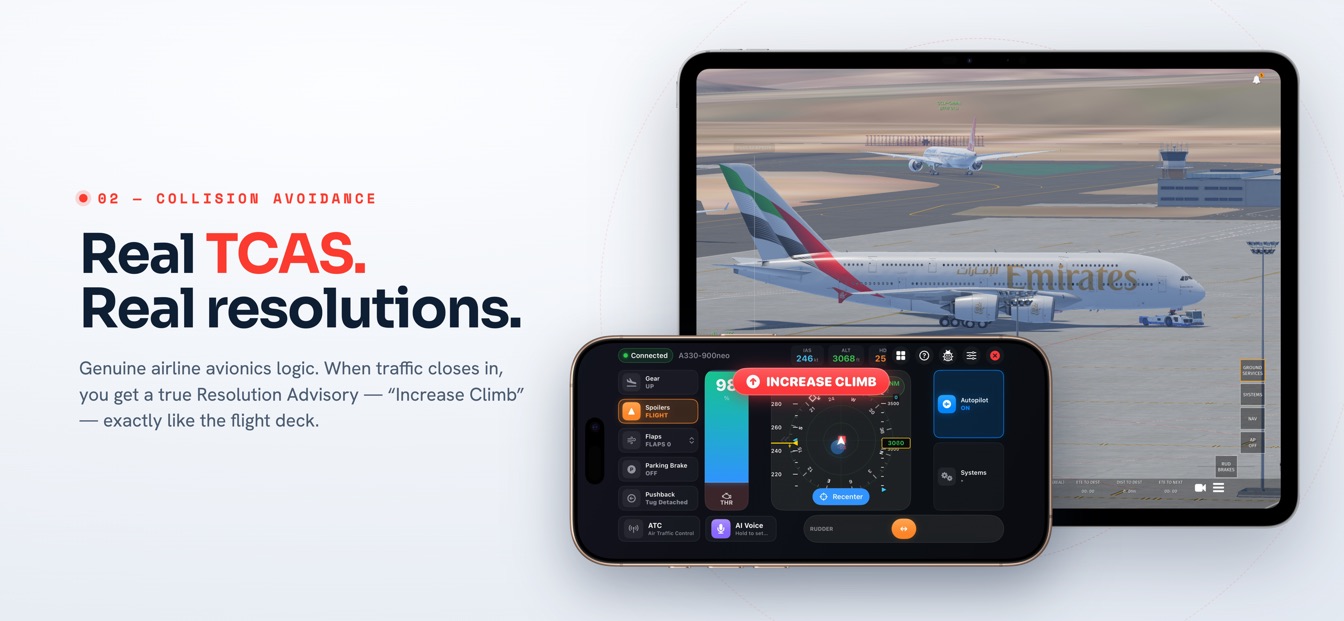
- TCAS traffic scope. An Airbus-style traffic display fed by Infinite Flight's live multiplayer traffic, with spoken advisories. A simulator display aid — not certified avionics.
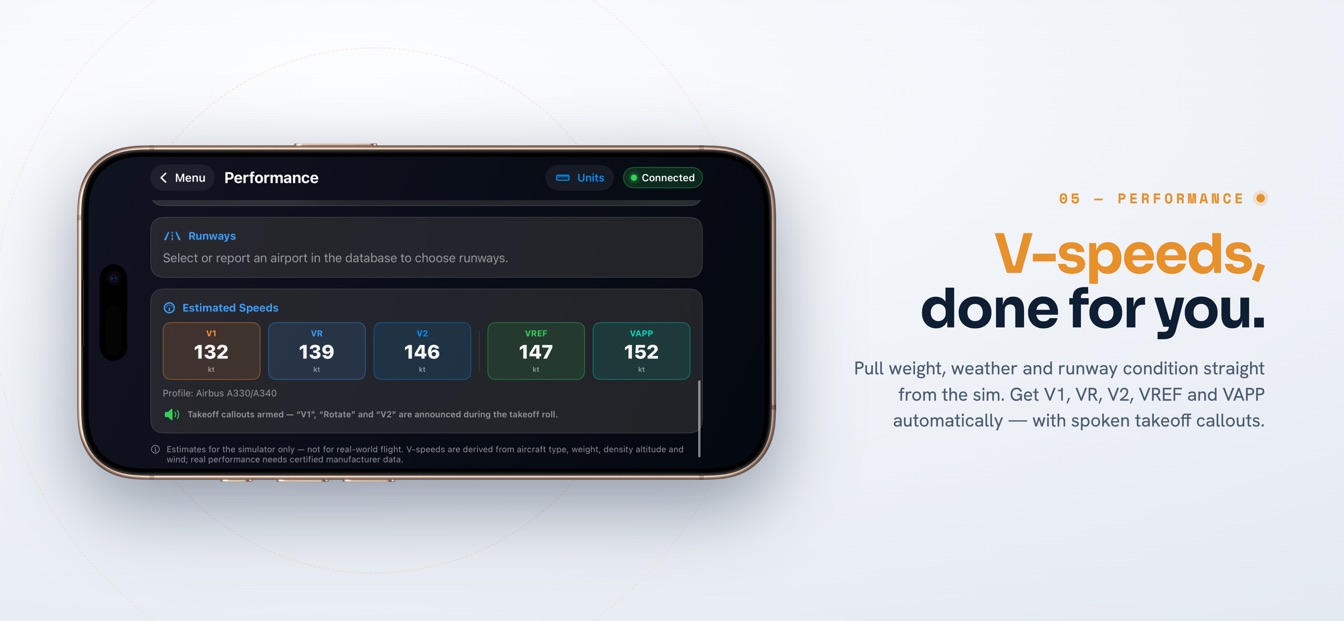
- Callouts and haptics. Spoken V1, Rotate and V2 on the takeoff roll, a five-second landing-gear thunk you feel in your hands, and a taxi rumble that picks up runway seams as you roll.
An honest comparison, line by line
None of this makes hardware obsolete — it changes the trade. Here is the comparison we would want to read before switching:
| What you're weighing | Dedicated hardware yoke | SkyYoke on an iPhone |
|---|---|---|
| Price | A meaningful outlay, with quadrants, pedals and mounts usually extra | No new hardware — it runs on the phone you already own |
| Force feel | Genuine spring resistance and long physical travel | Motion plus haptics — detent ticks, a gear thunk and ground rumble stand in for force |
| Desk space | Needs a clamp-friendly desk edge and a permanent footprint | None — fly from the couch, a lap or a tray table |
| Portability | Stays where it is bolted | Goes wherever your phone goes and reconnects on the same Wi-Fi |
| Tablet-sim compatibility | Cannot connect to Infinite Flight on an iPad | Built for it — speaks Infinite Flight's Connect API over Wi-Fi |
| Built-in panels | Buttons and hat switches; panels and quadrants sold separately | Throttle, rudder, autopilot, systems panel and a TCAS scope on one screen |
Where the hardware yoke still wins
Spring force is the big one. A physical column pushes back, and your hands learn that pressure in a way a motion gesture cannot fully reproduce; haptic ticks acknowledge events, they do not resist you. Long mechanical travel also gives a kind of fine pitch authority in the flare that some pilots will always prefer. And if you use a simulator to stay sharp for real-world flying, the muscle memory of a physical wheel is part of the point.
So keep the hardware if it still works, you fly on a PC, and the desk is yours. SkyYoke is the right replacement when the electronics fail, the desk disappears, the upgrade math stops adding up — or your simulator runs on a tablet that a USB yoke was never able to reach.
From boxed-up yoke to flying again
- Same Wi-FiPut your iPhone and the simulator device on one network.
- Auto-discoverSkyYoke finds the sim on the LAN — connect in a tap.
- Bind axes onceMap roll, pitch, throttle and yaw, guided step by step.
- FlyTilt, slide and speak to fly the aircraft in real time.
- Install and connect. Put SkyYoke on an iPhone running iOS 17.2 or later, with your simulator device on the same Wi-Fi. The app discovers Infinite Flight automatically — one tap and you are linked.
- Bind the axes once. Map roll, pitch, throttle and yaw in Infinite Flight's Controllers settings; the built-in setup guide walks you through every step.
- Tune and fly. Set your tilt range, tap to recenter, and take off. If the app ever disconnects mid-flight, an optional fail-safe hands control to the autopilot rather than the wind.
Frequently asked questions
Straight answers on replacing a hardware yoke with your iPhone.
Can an iPhone really work as a replacement for a Thrustmaster yoke?+
For most simmers, yes. SkyYoke reads the phone's gravity vector and converts wrist roll into aileron and a pull toward you into elevator, streamed to the simulator at 60 Hz over Wi-Fi. You give up the spring resistance of a physical column, but you gain a throttle, rudder, autopilot and systems panel on the same screen — and nothing to clamp, plug in or store.
Which flight simulators can SkyYoke control?+
Both are supported today. For Infinite Flight, SkyYoke connects through Infinite Flight's Connect API over your local Wi-Fi and finds the simulator automatically. Microsoft Flight Simulator 2024 is supported too, via IF Yoke Bridge, a free Windows companion app that runs beside MSFS, configures the firewall for you and is discovered by the phone automatically.
How does tilting a phone compare to turning a real yoke?+
Differently, but well. Because SkyYoke measures gravity rather than raw rotation, the motion yoke works in any grip — resting flat on your lap or held upright like a control column — and never hits gimbal lock. You choose how far to lean for full deflection (15–60 degrees), tap once to recenter, and tune sensitivity, dead zone, expo, trim and smoothing per axis until it feels right.
Do I lose the throttle and rudder when the yoke is my phone?+
No — they share the screen with the yoke. A smart throttle lever covers idle to full thrust, holds reverse for you on the landing roll, and becomes a proportional wheel brake below 40 knots. A self-centering rudder bar sits along the bottom edge for taxi steering and crosswind work. There is no extra quadrant or pedal set to buy or store.
Who should keep a hardware yoke instead?+
Pilots who prize physical spring force, long control travel and dedicated hardware detents — especially anyone using a simulator to stay sharp for real-world flying, where muscle memory on a physical column matters. If you fly only on a PC, have permanent desk space and your current yoke still works, keeping it is a sound choice. SkyYoke is the answer when hardware fails, space runs out or your simulator lives on a tablet.
Now on the App Store.
SkyYoke is available now — download it on the App Store and turn your iPhone into a full flight-sim cockpit.
Download on the App Store Get it on Google Play