Slow before the band
Treat 11,000 feet as your personal limit, not 10,000. Arriving at the band already at 250 turns a deadline into a non-event.
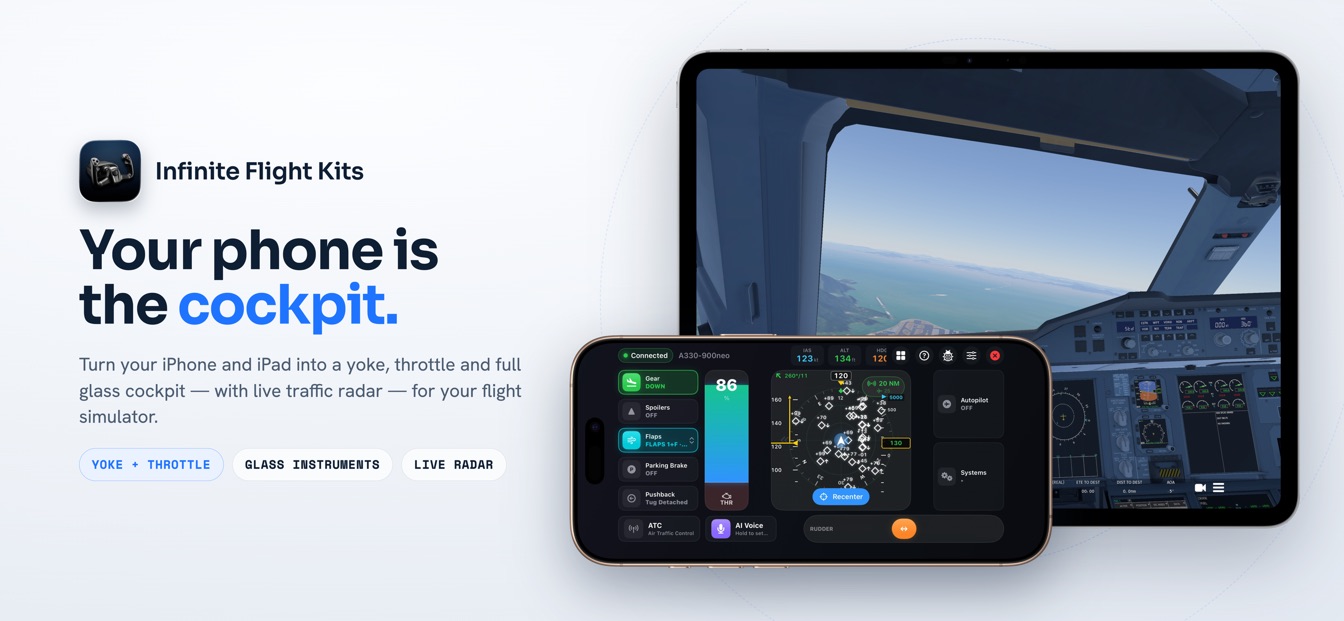
Most speed violations are planning failures, not flying failures. This guide shows how overspeeds develop in Infinite Flight, the descent habits that prevent them, and how SkyYoke's automated violation avoidance system backs you up when workload peaks.
A Violation Avoidance System for Infinite Flight is an automated safeguard that watches altitude and airspeed and intervenes before the simulator records an overspeed violation. SkyYoke builds one in: on Airbus and Boeing airliners with the autopilot engaged, it arms about 2,000 ft above the 250-knot band, clamps the speed target at the limit, and manages descent energy when speed alone will not save you.
There is a number every Infinite Flight pilot eventually memorizes: 250 knots, the indicated-airspeed ceiling below 10,000 feet. Cross the band faster than that and the simulator reacts in stages. First comes a warning — an unmissable prompt that you are over the limit, with a short window to correct it. Stay fast, and the warning hardens into a violation on your record. Violations matter because they feed into your grade, and your grade is what opens the doors to the busier, more structured online servers. One careless descent can undo weeks of tidy flying. This guide is about prevention: how those overspeeds actually develop, the descent discipline that stops them, and how the automated Violation Avoidance System for Infinite Flight built into SkyYoke stands behind you as a second pair of eyes.
Here is the encouraging part: almost nobody busts the limit on purpose. Overspeeds are planning failures dressed up as flying failures — which means a little structure removes nearly all of them.
Most violations are born ten minutes before they happen, back at the top of descent. You dial a healthy descent speed — 290, maybe 300 knots — and let VNAV or a vertical-speed mode carry you downhill. The aircraft is stable, the workload is low, and that is precisely the danger: the descent feels finished long before it is. Three patterns account for almost every bust:
Three habits prevent the overwhelming majority of overspeed violations, and none of them require talent — only timing:
Treat 11,000 feet as your personal limit, not 10,000. Arriving at the band already at 250 turns a deadline into a non-event.
Roughly three miles per thousand feet, plus extra room to decelerate. A jet will not slow down and go down steeply at the same time.
The current airspeed tells you the past; the trend tells you the future. If the tape is rising at idle, act before the number is a problem.
Vertical speed is the lever that ties these together. When the airspeed creeps up with the thrust already at idle, the fix is geometry: shallow the descent and gravity stops feeding the speed tape. SkyYoke's Airbus-style PFD makes the picture easy to read — the speed tape carries a trend arrow that shows where the airspeed is going, not just where it is, and cyan bugs confirm what the autopilot is actually targeting.
Run this before you leave cruise. It takes thirty seconds and replaces every panicked, last-minute deceleration:
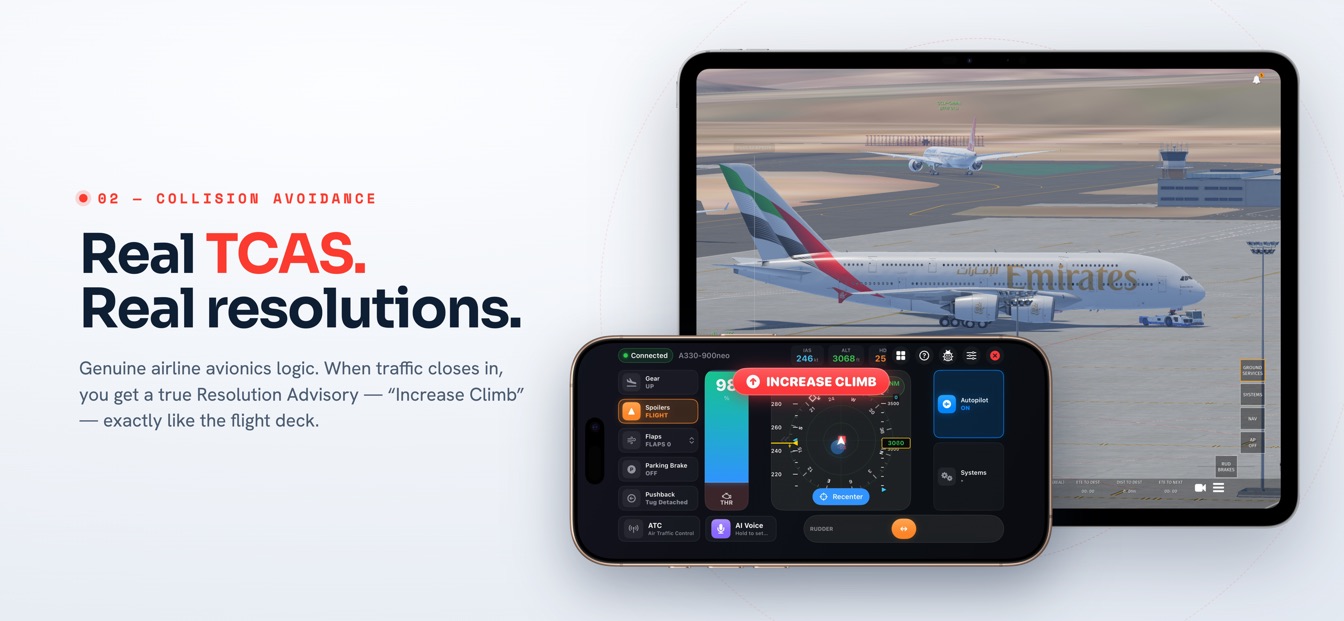
Habits cover the flights where you are paying attention; automation covers the ones where you are not. SkyYoke includes a Violation Avoidance System — VAS — that runs quietly in the background whenever you fly an Airbus or Boeing airliner with the autopilot engaged. It continuously compares your altitude, airspeed and autopilot targets against the 250-knot band, and it starts paying close attention about 2,000 feet above it.
When trouble is brewing, VAS picks one of two strategies. If the problem is simply a high speed target left dialed, it clamps the autopilot target to 250 knots — and it remembers the speed you had set, restoring it automatically once you are clear of the restriction. If the problem is energy — a descent steep enough that the aircraft accelerates no matter what the target says — it manages the situation directly: throttle to idle, then either a level-off to bleed speed or the steepest descent rate that still holds the limit. The full VAS feature page covers the engineering in depth; this guide stops at what it means in the seat. VAS is one of several watchkeeping aids in SkyYoke's remote cockpit for Infinite Flight, alongside the TCAS traffic scope.
VAS announces itself the way real cockpit automation does: with a status annunciator and a calm voice. The annunciator lives on the cockpit screen and steps through four phases, so you always know whether the system is idle, watching or actively flying the numbers.

| Phase | When you see it | What the system is doing |
|---|---|---|
| OFF | VAS is switched off or unavailable for the current aircraft | No monitoring — speed management is entirely yours. |
| STANDBY | Flying well above the protection band | Quietly tracking altitude, airspeed and autopilot state. |
| ARMED | Within about 2,000 feet of the 250-knot band | Watching closely, ready to act the moment a bust becomes likely. |
| PROTECTING | An intervention is in progress | Clamping the speed target or managing descent energy until the threat passes. |
Interventions are voiced as well as shown. When VAS clamps your target, you hear “Speed limit, two fifty”; when it has to trade descent for deceleration, you hear “Speed, leveling off.” The calls are short, specific and impossible to mistake for anything else — and the colored annunciator confirms on screen what you just heard.
Quick answers about avoiding speed violations in Infinite Flight.
It is an automated safeguard that monitors airspeed and altitude and intervenes before Infinite Flight issues an overspeed violation. SkyYoke's version works on Airbus and Boeing airliners while the autopilot is engaged: it arms roughly 2,000 ft above the 250-knot band, clamps the autopilot speed target at the limit, and manages descent energy when the aircraft is accelerating downhill. It is an aid to good airmanship, never a substitute for it.
Because that is where Infinite Flight enforces its 250-knot limit, and a descending jet arrives there carrying energy to spare. A speed target left at cruise-descent values, or an idle descent that keeps accelerating, will carry you through 10,000 feet too fast. The simulator warns first, but if the speed is not corrected promptly a violation follows — so the band catches pilots who start slowing late.
Plan to be at 250 knots before 10,000 feet, not at it. Dial the lower speed target by 11,000 to 12,000 feet, shallow the descent while the aircraft decelerates, and watch the speed trend rather than the current number. If speed keeps creeping with the throttle at idle, reduce your vertical speed — a shallower descent bleeds energy far faster than a last-second correction.
VAS arms about 2,000 feet above the restricted band. If you would cross 10,000 feet with a high speed target still set, it clamps the autopilot target to 250 knots, remembering the value you dialed and restoring it once you are clear. If the descent itself is generating too much speed, it manages energy instead — idling the throttle and leveling off, or finding the steepest descent rate that still holds the limit.
VAS supports Airbus and Boeing airliners in Infinite Flight and acts only while the autopilot is engaged; it is not available for Microsoft Flight Simulator. And yes, a violation is still possible — VAS is a safety net, not a guarantee. Hand-flown descents, late autopilot disconnects, or extreme energy states can outrun it, so the habits in this guide remain your primary protection.
SkyYoke is available now — download it on the App Store and turn your iPhone into a full flight-sim cockpit.
Download on the App Store Get it on Google Play