One-lever smart throttle
A single lever covers thrust and braking, with a haptic tick at the idle detent — and Airbus types get a gated TOGA / FLX / CLB quadrant.
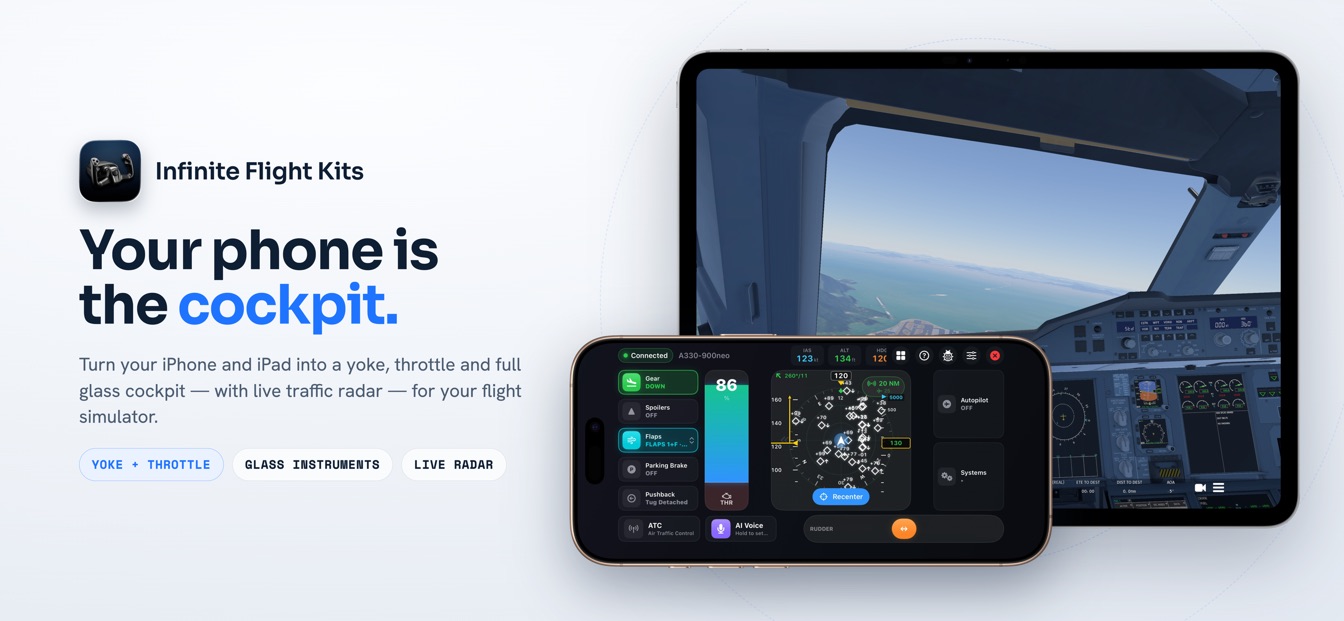
Dedicated yokes are wonderful — and expensive, desk-bound and impossible to pack. SkyYoke turns your iPhone into a wireless yoke for Microsoft Flight Simulator 2024, with the throttle, rudder and autopilot riding along on the same screen.
A Microsoft Flight Simulator yoke doesn't have to be hardware. SkyYoke turns an iPhone into a motion-sensing yoke for MSFS 2024: tilt the phone to bank and pitch while an on-screen throttle, rudder bar and autopilot panel ride alongside — connected over Wi-Fi through a free Windows companion app, and it's available now on the App Store.
Sooner or later every simmer outgrows the keyboard. The takeoffs feel mechanical, the flare is pure guesswork, and a proper Microsoft Flight Simulator yoke climbs to the top of the wish list. That is when the real questions begin — because a yoke is not just a purchase, it is a commitment to a particular way of flying.
Before comparing brands and models, be honest about what you are optimizing for. Five things separate a yoke you will love from one that gathers dust:
SkyYoke takes a different route to the same destination. Instead of adding equipment, it borrows the most capable device you already carry: your iPhone becomes a motion-sensing control column for MSFS 2024 — roll it to bank, tip it to pitch — while the touchscreen around your thumbs hosts the levers and panels a hardware yoke leaves out. Neither approach is universally better; they are different bargains. Here is the honest ledger:
| What you're weighing | Dedicated hardware yoke | SkyYoke on your iPhone |
|---|---|---|
| Cost | A real purchase — and quadrants, pedals and mounts are usually extra | No new hardware; it runs on the iPhone already in your pocket |
| Desk space | Needs a clamp-friendly desk edge plus clearance for the shaft | None — it rests in your hands or flat on your lap |
| Force feel | Genuine spring or cam resistance; the gold standard for muscle memory | No physical resistance; haptic detents and ticks stand in for it |
| Portability | Effectively zero once mounted | Goes wherever the phone goes — couch, train, hotel room |
| Extra panels included | Throttle, rudder and autopilot controls are separate products | Throttle lever, rudder bar and autopilot panel share the same screen |
| Setup time | Mounting, drivers and control profiles before the first flight | Join the same Wi-Fi; the phone finds the simulator's companion bridge by itself |
Let's not pretend otherwise: a screen cannot push back. A spring-loaded shaft resists your pull, loads up as you bank, and snaps to a center your hands learn to find blind. For trimming by feel, for the slow build of muscle memory across hundreds of approaches, physical resistance is genuinely better — and no app, this one included, replicates it.
There is also the matter of permanence. A home cockpit with a mounted yoke, quadrant and pedals turns a desk into a flight deck, and for pilots chasing study-level realism — an airliner flown gate to gate, checklists and all — that permanence is the point. The controls are always where your hands expect them, always calibrated, always ready. If that describes your flying, buy the hardware and enjoy it; SkyYoke then makes a fine travel companion rather than a replacement.
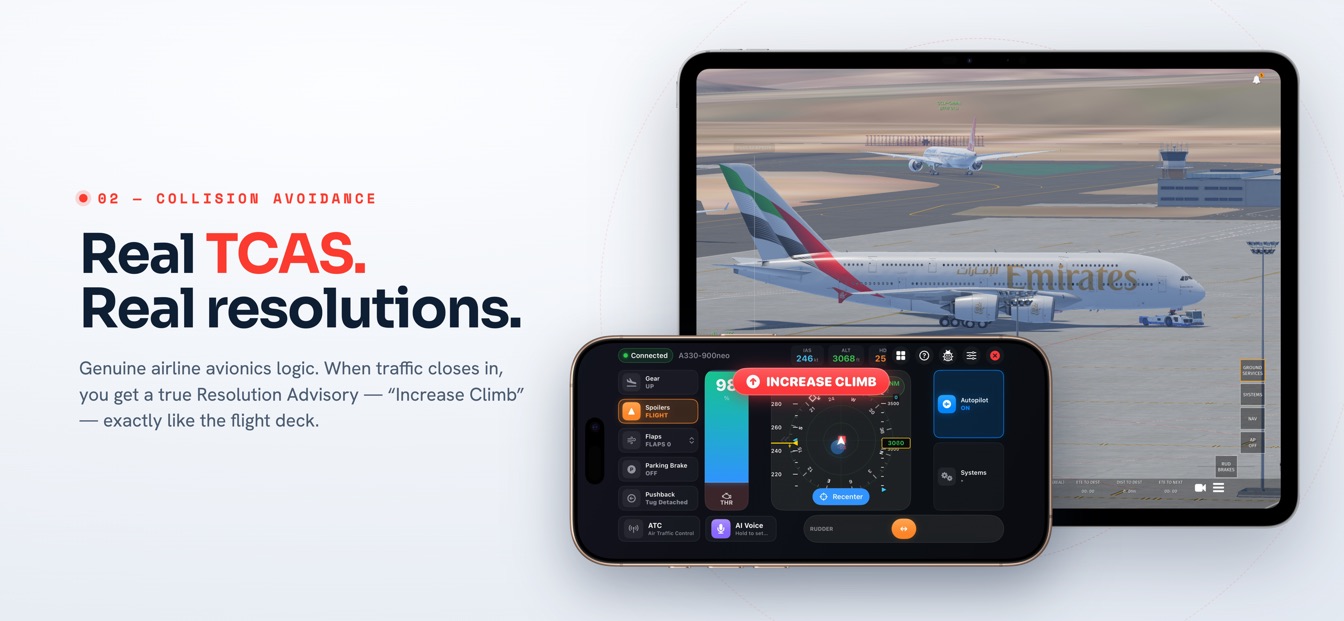
The case for SkyYoke is not that it imitates hardware — it is that it does things a bolted-down yoke cannot. It asks for no new spending and no desk surgery. It flies from the couch on a lazy Sunday and from a hotel room on a work trip, because the entire cockpit fits in a jacket pocket. And where hardware splits the flight deck across separate purchases, the phone keeps everything on one pane of glass:
A single lever covers thrust and braking, with a haptic tick at the idle detent — and Airbus types get a gated TOGA / FLX / CLB quadrant.
A self-centering rudder bar runs along the bottom edge, and the autopilot panel dials altitude, speed, heading and vertical speed with a swipe.
Detent ticks, flap clicks, a five-second landing-gear thunk and a taxi rumble that scales with ground speed give the glass some feel.
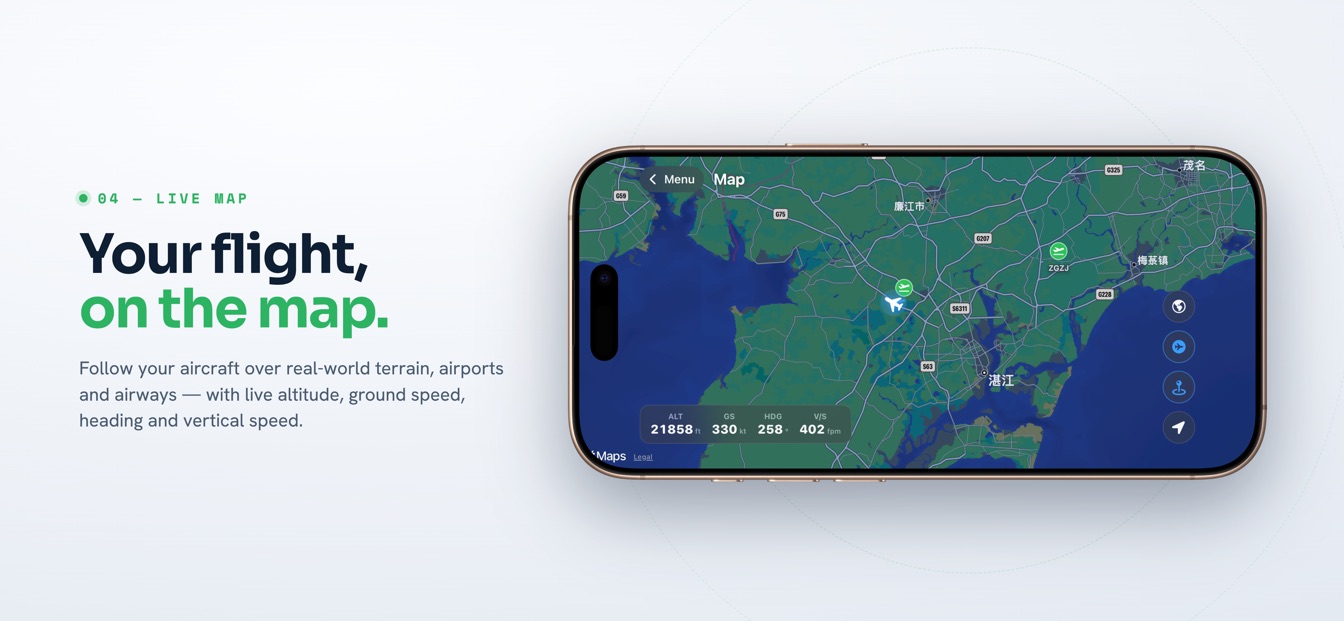
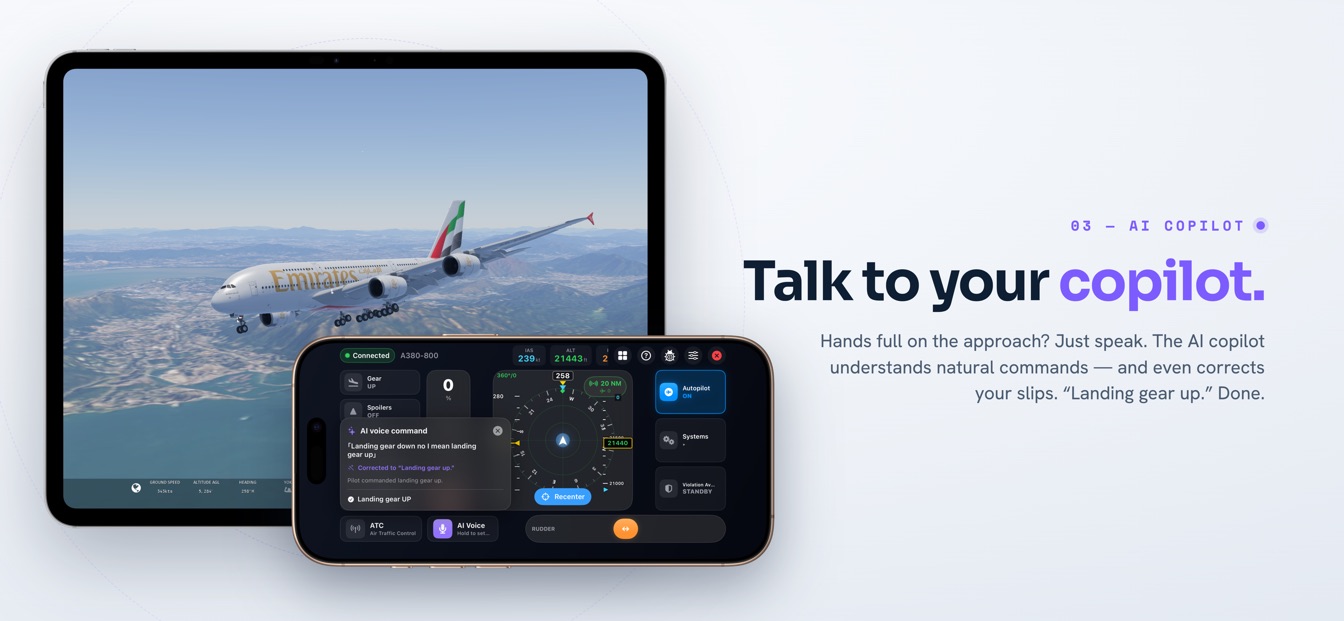
The motion control itself is more refined than "phone tilt" might suggest. SkyYoke reads the gravity vector rather than raw angles, so it works flat on a lap or held upright like a column, never hits gimbal lock, and recenters with one tap. Pitch, roll and yaw each carry their own sensitivity, dead zone, expo curve, inversion, trim and smoothing settings, and a 60 Hz control loop keeps inputs flowing without flooding the network. The lever deserves its own tour — the MSFS remote throttle page walks through it detent by detent.
The link between phone and PC is a free Windows companion app called IF Yoke Bridge. It runs quietly beside Microsoft Flight Simulator 2024, opens the right firewall door automatically, and announces itself on your network so the phone can find it without any IP-address spelunking. The bridge also re-sends axis values continuously — a quirk of the simulator means a one-shot command lets levers snap back to zero, so the bridge keeps repeating your intent — and it treats wheel braking as a true progressive axis rather than an on/off key press.
Aircraft presets tailor the mapping to what you fly: a generic profile, the iniBuilds A320 and A350, and the Fenix A320 — whose famously stubborn thrust levers get special handling of their own, covered on the Fenix A320 remote joystick page. Beyond the primary axes, the phone will command landing gear, flaps, spoilers, parking brake, pushback, lights and pause, plus autopilot modes and targets for altitude, vertical speed, airspeed, heading, NAV and approach.
When support ships, getting airborne will look like this:
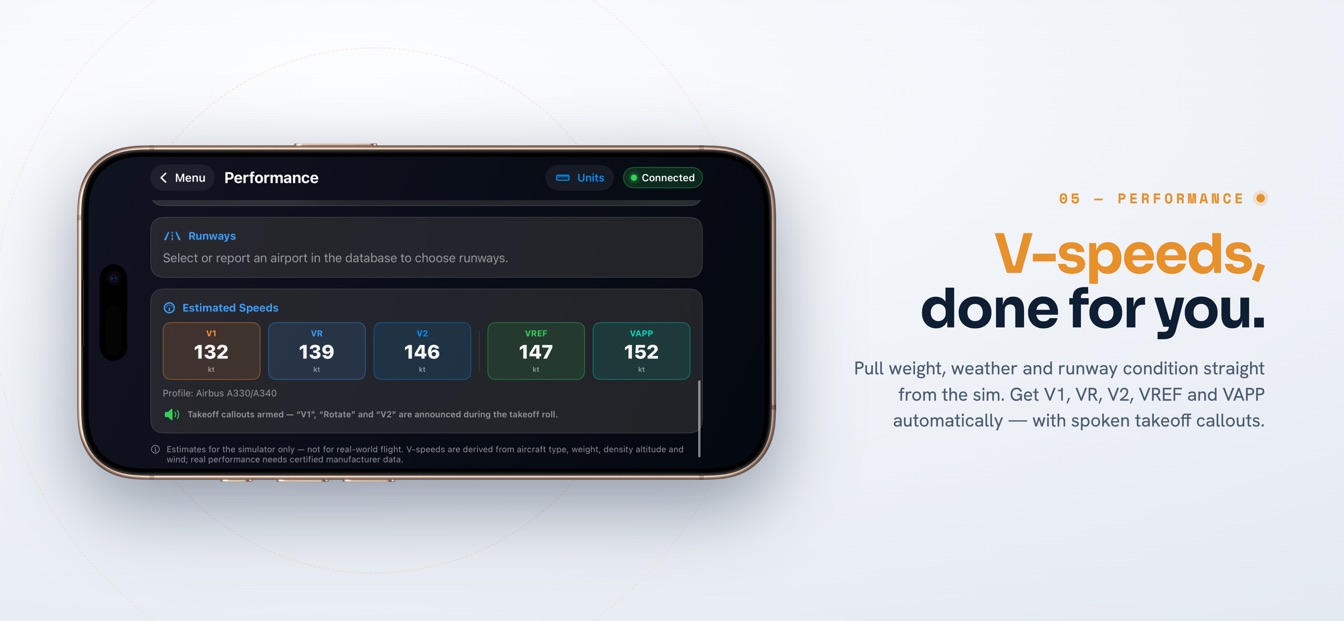
If you also fly Infinite Flight — or simply want the widest feature set — everything described here works there today, plus a layer of extras the MSFS build doesn't carry: an ATC keypad with a live message log, a TCAS-style traffic scope, a moving map, and a performance planner with estimated V-speeds (estimates for the simulator, never for real-world use). Start with the Infinite Flight remote yoke, or see how the whole remote cockpit hangs together. Whichever simulator you call home, the yoke you were about to buy might already be charging on your nightstand.
Straight answers for anyone weighing a yoke purchase for MSFS 2024.
For many pilots, yes. SkyYoke reads the phone's gravity vector, so tilting it banks and pitches the aircraft, with a configurable 15–60° tilt range, per-axis sensitivity, dead zone and expo tuning, and one-tap recentering. You trade away physical spring resistance, but you gain a throttle, rudder bar and autopilot panel on the same screen, and there is no extra hardware to buy.
Yes. MSFS 2024 support ships in the released app, working through IF Yoke Bridge, a free Windows companion app that runs alongside the simulator. SkyYoke's full feature set also works with Infinite Flight. Download it on the App Store / Google Play now to fly either simulator.
Through IF Yoke Bridge, a free companion app for Windows that runs next to Microsoft Flight Simulator 2024. The bridge configures the firewall automatically, and the phone discovers it on your Wi-Fi network by itself, so there are no IP addresses to type. It also re-sends axis values continuously, which keeps levers from snapping back to zero mid-flight.
It covers roll, pitch, yaw, throttle and a true progressive brake axis, plus landing gear, flaps, spoilers, parking brake, pushback, lights and pause. Autopilot modes and targets — altitude, vertical speed, airspeed, heading, NAV and approach — are included, and aircraft presets tailor the mapping for generic aircraft, the iniBuilds A320 and A350, and the Fenix A320.
If you fly long sessions at a permanent desk and want genuine spring resistance under your hands, a dedicated hardware yoke is still the better instrument — nothing on a screen replicates physical force. If you fly from the couch, travel often, share your desk, or simply do not want to spend money on peripherals, a phone-based yoke is the more practical choice.
SkyYoke is available now — download it on the App Store and turn your iPhone into a full flight-sim cockpit.
Download on the App Store Get it on Google Play