Smart throttle
A single thrust lever beside the yoke, with Airbus-style gated detents on Airbus presets and a haptic tick at idle.
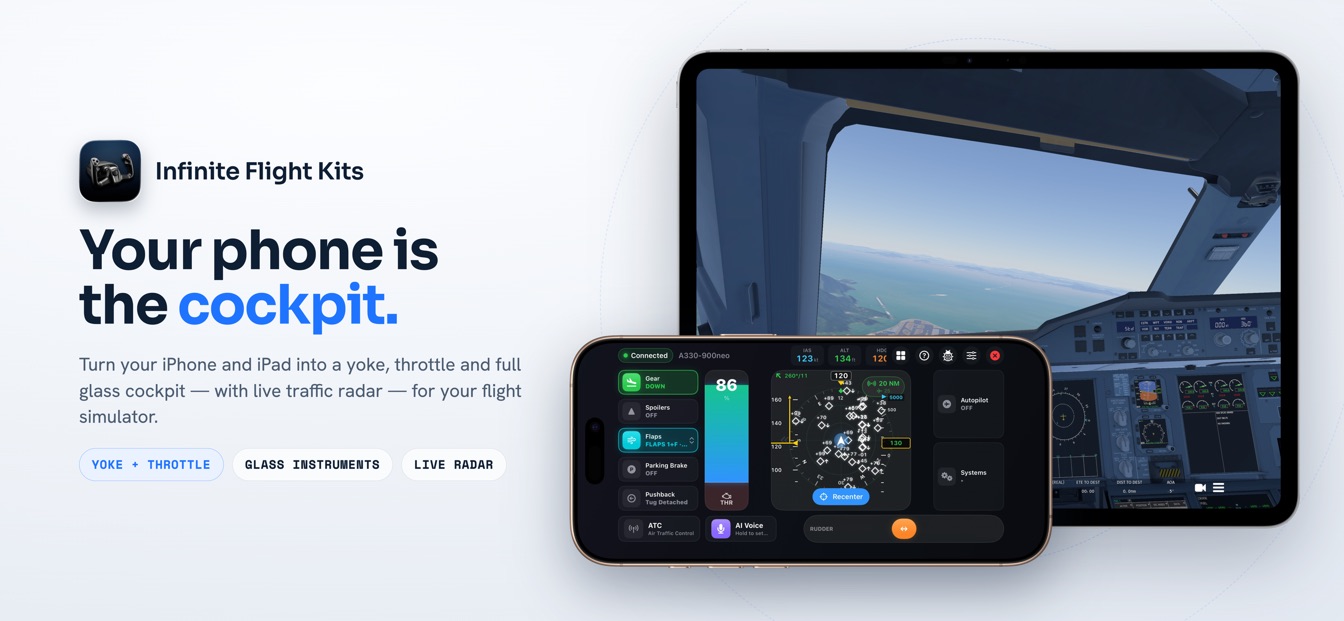
Pick up your iPhone and you are holding a wireless remote yoke for Microsoft Flight Simulator 2024 — tilt to bank and pitch any aircraft while a free Windows companion links phone and PC over your own Wi-Fi. It's available now on the App Store.
A Microsoft Flight Simulator remote yoke is a phone app that serves as wireless flight controls for MSFS on your PC: SkyYoke turns an iPhone into one for MSFS 2024, sending tilt-based (or touch-based) roll and pitch over Wi-Fi through the free IF Yoke Bridge companion running beside the simulator. MSFS 2024 support is available now on the App Store.
Most Microsoft Flight Simulator pilots own exactly one set of controls, and it lives bolted to a desk. The moment you leave that desk — to fly on the living-room TV, on a laptop in a hotel room, or from the jump seat of a friend's home cockpit — you are back to keyboard and mouse. A Microsoft Flight Simulator remote yoke closes that gap with hardware you already carry: SkyYoke turns your iPhone into a wireless yoke for MSFS 2024, streaming roll and pitch to the PC over your own network.
That portability cuts three ways:
The Motion Yoke measures gravity, not arbitrary device angles. You choose a neutral position — phone flat on your knee, propped on an armrest, or held upright like a control column — and the app tracks how far you lean away from that neutral. Because the reference is the gravity vector relative to your own center, the control is grip-independent: it behaves identically however you hold the phone, and it can never run into gimbal lock.
Two details make it livable hour after hour. A one-tap Recenter captures a fresh neutral whenever you shift in your seat, and a configurable tilt range — anywhere from 15 to 60 degrees — decides how much lean equals full deflection. Set it narrow for fingertip-light handling, or wide for deliberate, airliner-style inputs.
And because the phone simply sends standard roll and pitch axes, the aircraft type does not matter. A yoked 737 or a Cessna 172 reads the tilt as turning and pulling a column; a fly-by-wire A320 reads the very same tilt as sidestick deflection. One control, every flight deck.
If you would rather keep the phone perfectly still — balanced on a tray table, say — switch to the Touch Joystick. It is an on-screen, self-centering pad: drag the knob for roll and pitch, let go, and it springs straight back to neutral. The mapping is 1:1, so what your thumb does is exactly what the aircraft gets.
No two pilots want the same response, and no two aircraft deserve it. Every axis in SkyYoke — pitch, roll, yaw and brake — passes through its own conditioning chain before it leaves the phone:
| Setting | What it changes |
|---|---|
| Sensitivity | How strongly the aircraft responds to a given amount of lean or drag. |
| Dead zone | A quiet band around center, rescaled so full travel still reaches the stops. |
| Expo curve | Softens response near neutral while keeping full authority at the edges. |
| Inversion | Flips an axis when your instinct runs the other way. |
| Smoothing | A low-pass filter that damps hand tremor and road bumps out of the signal. |
A short-field Cessna circuit might call for high sensitivity and zero expo; a heavy in cruise feels better with a soft curve, a touch of smoothing and a wider dead zone. Tune each axis once and the settings stay put.
MSFS has a deserved reputation for fiddly external-app setup: SimConnect configuration files, port numbers, firewall exceptions. SkyYoke's answer is IF Yoke Bridge, a free companion app that runs on the same Windows PC as MSFS 2024. The bridge talks to the simulator locally and handles the network side itself — it configures the Windows firewall automatically and announces itself on your Wi-Fi, so the phone discovers it on its own. You never type an IP address, and you never open an XML file.
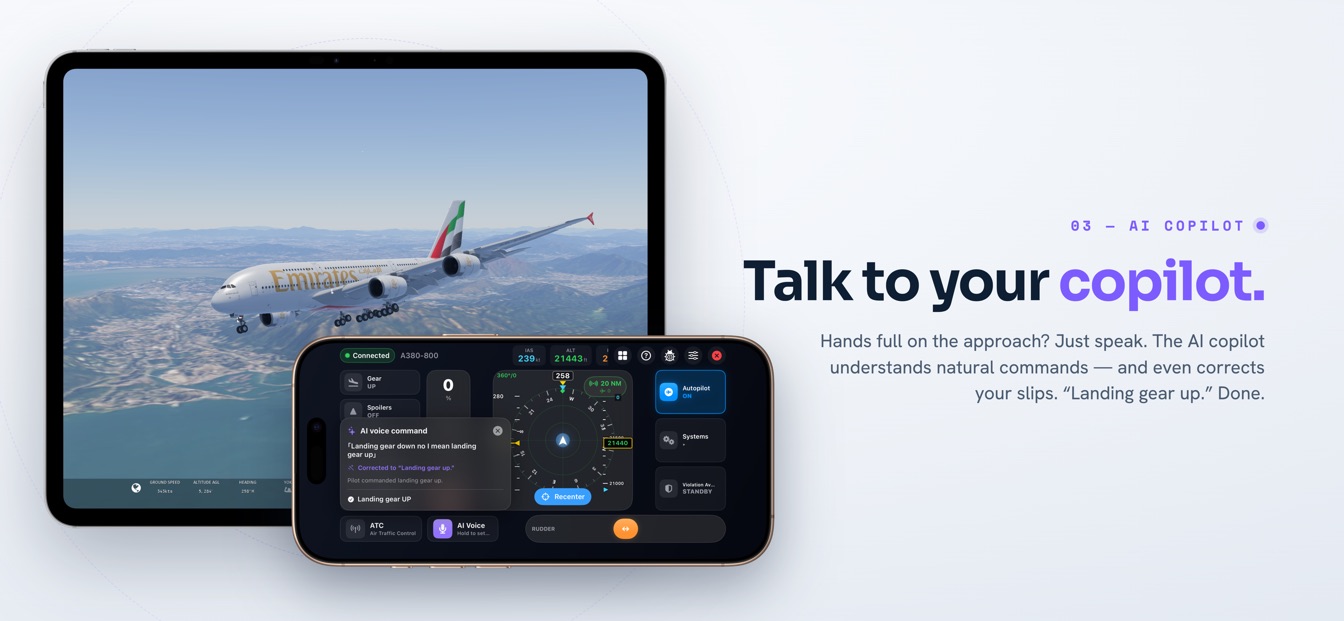
The bridge also handles a quirk every MSFS controller developer knows: axis values that are not refreshed snap back to zero. IF Yoke Bridge re-sends your control positions continuously, so the yoke holds the bank you are commanding and the throttle stays where you left it. Aircraft presets — generic, iniBuilds A320, iniBuilds A350 and Fenix A320 — tailor the mapping to the airplane, including the Fenix's famously non-standard thrust levers.
Roll and pitch are only half the job, so the cockpit screen keeps the rest under your thumbs — the phone carries a full control loadout, not one lonely axis:
A single thrust lever beside the yoke, with Airbus-style gated detents on Airbus presets and a haptic tick at idle.
A self-centering strip along the bottom edge for yaw — taxi steering, crosswind corrections and slips.
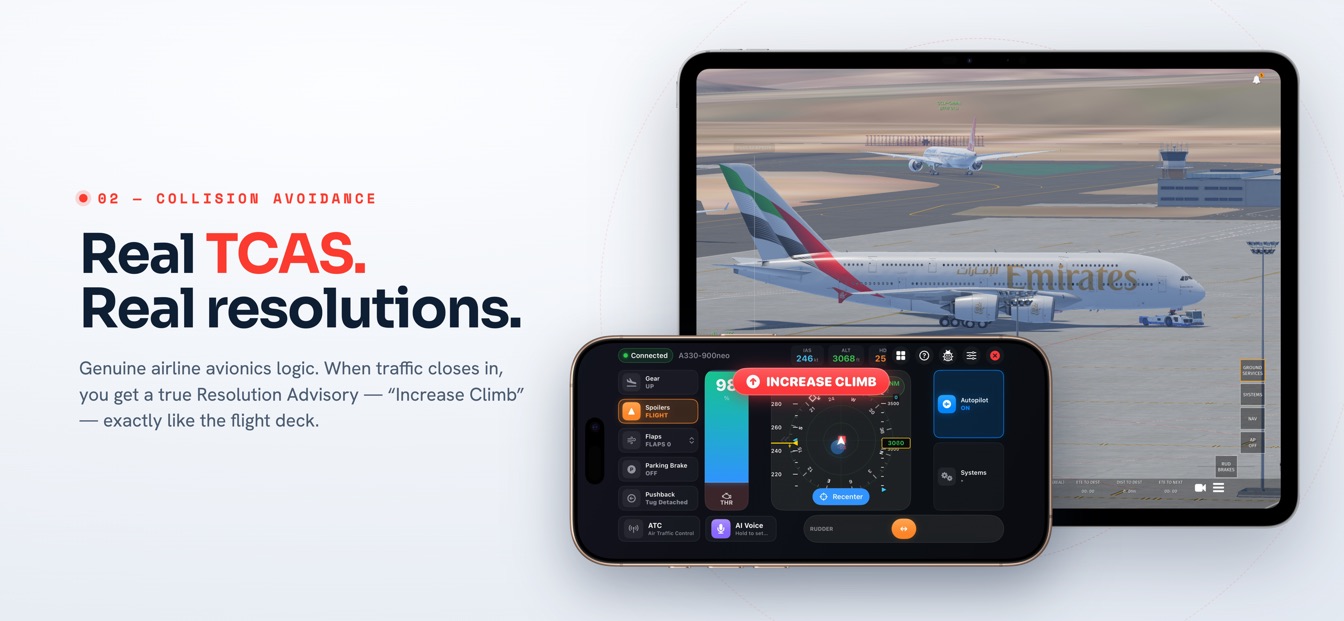
AP master plus altitude, vertical speed, speed and heading targets, with NAV and approach modes.
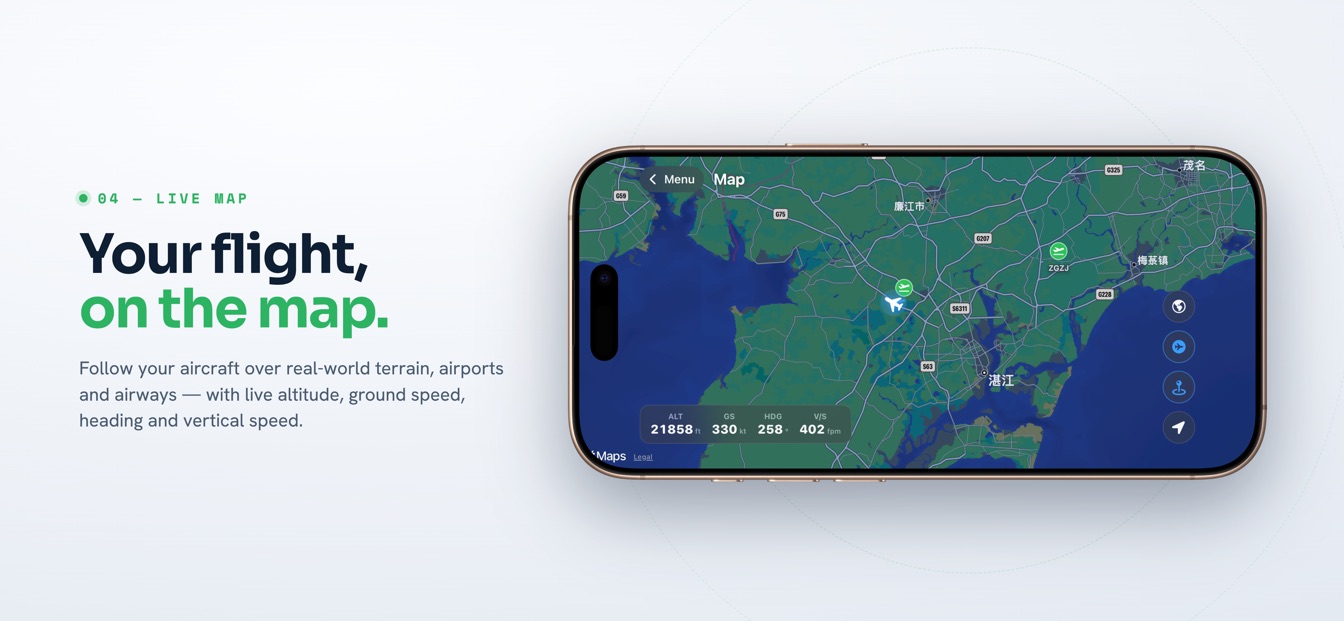
Beyond the primary controls, the same screen reaches landing gear, flaps, spoilers, parking brake, pushback, lights and pause — and in MSFS, braking rides a true progressive axis rather than an on-off key. If thrust management is what brought you here, there is a dedicated page on the remote throttle for MSFS.
Here is how a session goes:
From pushback to shutdown, the phone is the only controller you will need to reach for.
What MSFS pilots ask about flying from a phone.
A Microsoft Flight Simulator remote yoke is an app that turns a phone into wireless flight controls for MSFS running on your PC. SkyYoke uses the iPhone you already own: tilt it to bank and pitch, or drag an on-screen joystick pad, and the inputs reach MSFS 2024 over your home Wi-Fi through a free Windows companion app called IF Yoke Bridge. No cables, no extra hardware.
Yes. SkyYoke supports MSFS 2024 today, alongside Infinite Flight — both work in the released app. MSFS connects through IF Yoke Bridge, a free Windows companion app that runs beside the simulator and handles the bridge and cockpit link. Download it on the App Store / Google Play now to fly either simulator.
No. The connection runs through IF Yoke Bridge, a free companion app that sits next to MSFS on your Windows PC. The bridge configures the Windows firewall automatically on first launch and announces itself on your network, so the phone discovers it without you typing an IP address or touching SimConnect configuration files.
Yes. The motion yoke sends standard roll and pitch axes, so MSFS treats it like any other controller — it flies a yoked 737 or a Cessna 172 exactly as it flies a sidestick A320. Because the tilt input is gravity-based and grip-independent, you can hold the phone whichever way suits the aircraft. On Airbus presets, the throttle also gains gated detents — IDLE, CLIMB, FLX and TOGA — with a haptic tick at each gate.
Yes — they share one screen. While you tilt or drag to fly, a smart throttle lever sits beside the yoke and a self-centering rudder bar runs along the bottom edge. In MSFS the brakes use a true progressive axis, and the bridge re-sends axis values continuously, so throttle and control positions hold steady instead of snapping back to zero.
SkyYoke is available now — download it on the App Store and turn your iPhone into a full flight-sim cockpit.
Download on the App Store Get it on Google Play